
The Bonsai Welcome Garden, or "Yokoso Niwa" is inspired by Japanese bonsai and moss gardens. The garden represents a landscape of mountains (symbolised by the large rocks) with a dry river bed flowing between them.
Opening Hours
Monday to Sunday & public holidays: 9am - 4pm (closed 25 December)

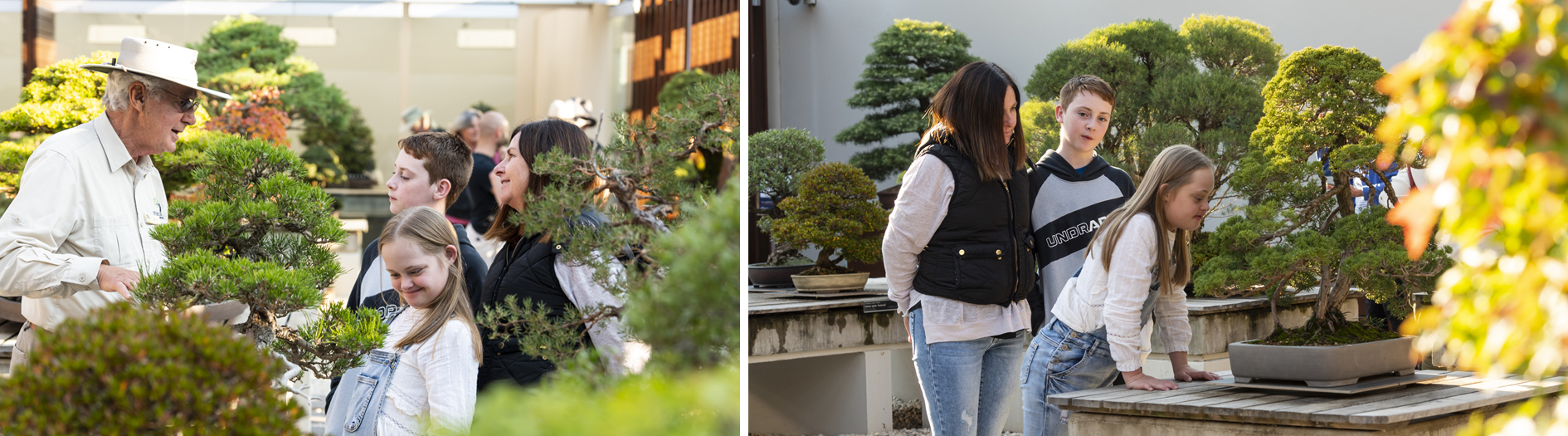


The National Bonsai & Penjing Collection of Australia (NBPCA) is a partnership between the ACT Government and the Australian Bonsai Community. The Collection was officially opened on 28 September 2008 by then ACT Chief Minister, Jon Stanhope. The NBPCA resided in Commonwealth Park near Stage 88 between this time and the 1st of February 2013 when it moved to the National Arboretum Canberra.
The Collection
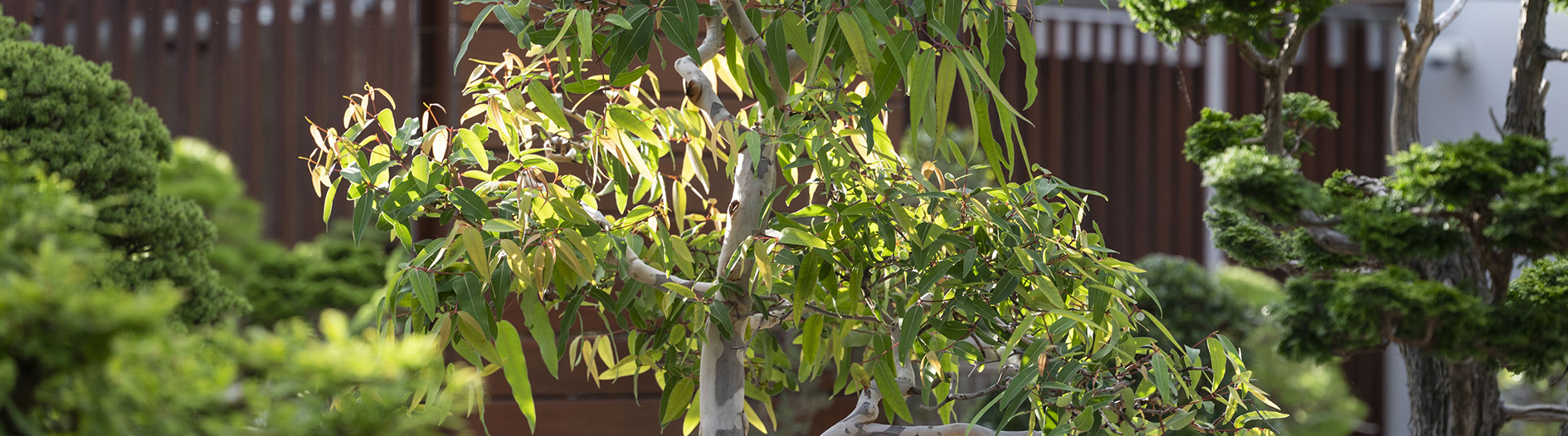
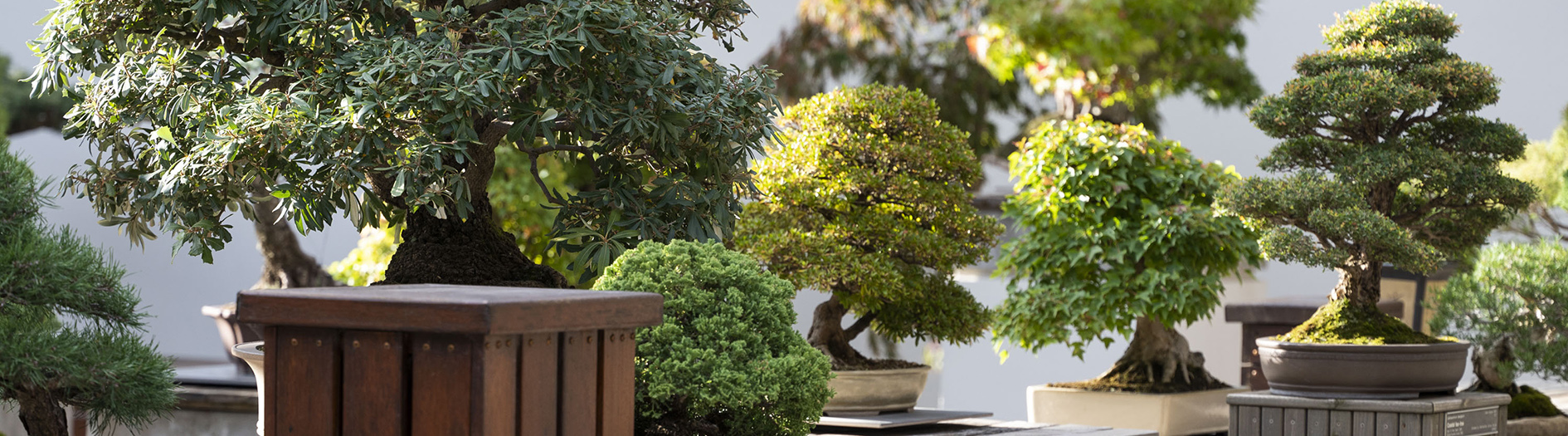
The Collection consists of 120 exhibits with approximately 75 trees on display at any one time. The trees are a variety of traditional and modern styles with the Collection highlighting Australian native species including Banksia serrata and Eucalyptus camaldulensis’.
Many of the trees are owned by the Collection whilst others on loan from around Australia by the artists or their family. This allows for continued involvement with the community and enables for a dynamic and diverse collection that is always changing and providing new experiences for visitors.
Visit us and see for yourself, or take a 3D virtual tour of the collection by Canberra business Photostat3D – an amazing immersive experience!
The National Bonsai and Penjing Collection of Australia is a program of the Chief Minister, Treasury and Economic Development Directorate of ACT Government.
Highlights
Just outside the National Bonsai and Penjing Collection are two Japanese black pines (Pinus thunbergii) styled as niwaki (larger-scale and similar to bonsai).
A 165 million year old petrified tree stump is now on display in the National Bonsai and Penjing Collection, kindly donated by the National Dinosaur Museum.
A rare fossil dating back to the Jurassic era, this tree stump comes from the Wandoan region in Queensland.
Supporting the Collection |
The collection is supported by enthusiastic and knowledgeable volunteers, and the broader bonsai and penjing community. New volunteers are always welcome and free training is provided. For more information, contact the Curator, Leigh Taafe on 02 6207 8483, email: leigh.taafe@act.gov.au
Donations will fund improvements to the Collection, so it remains a world class exhibition and improves the arts of Bonsai and Penjing in Australia. Such improvements may include specialist bonsai artist work on trees and their associated travel costs, bonsai pots for donated trees, and activities that enhance the visitor experience and reputation of the Collection. Donate here
About bonsai and penjing
Bonsai is the art and science of growing miniature trees and shrubs in containers by regular pruning of the roots and branches. It has been practised in Japan for at least 1,200 years, and includes training, styling and maintenance of the trees. Bonsai originated from the Chinese practice of penjing.
Penjing is the art of and science of growing miniature landscapes in a pot or tray, and can include rocks, different types of trees and ground covers, and perhaps small objects or figurines. Penjing may have a story, name or piece of poetry attached to it, and has been practised in China for at least 1,400 years.
The creative practice of bonsai and penjing requires vision, planning, horticultural and artistic skills and a great deal of patience. Bonsai and penjing creations are so valued that they are often handed down through generations of families.
Growing bonsai and penjing
Shaping the trees is done by either ‘wiring’ or ‘clip and grow’ techniques. The trees are not genetically altered - growing them in containers and shaping the branches and foliage creates the size, shape and style.
The branches and foliage are pruned at least once a year, sometimes more frequently. The roots are trimmed and the potting media is replaced on a 2-5 year cycle; promoting new root growth and enabling the trees to remain healthy in pot culture.
Sunlight, water and fertiliser are the three primary elements needed to keep the trees in good condition, and encourage flowering and fruiting in certain species.
Did you know? In nature, trees can live for hundreds and sometimes thousands of years, while bonsai and penjing can live indefinitely because of the constant trimming and promotion of new growth.
Culture
Bonsai and penjing grew from, and are heavily influenced by Chinese and Japanese culture. They are infused with concepts from Taoism, Confucianism and Zen Buddhism, such as reverence for old age. Zen aesthetics are minimalistic and uncluttered, sometimes expressed as ‘less is more’.
Penjing artists will sometimes place small figurines, bridges, boats or animals in their settings with the miniature trees. These are often included to enhance the sense of perspective and proportion (although are often misunderstood as being just ‘decorative’ or kitsch). The figurines are intended to show the place of people within a landscape: making use of it, living within it, but not dominating it.
The deeper significance of bonsai and penjing in the west is still evolving, with focus continually shifting towards the ancient ideals, as well as artistic form, horticultural craftsmanship, aesthetic beauty and appreciation.
Art
Bonsai and penjing artists sculpt the living tree, combining horticultural and artistic practices to produce a miniature version of a full-size tree growing in the wild.
Creativity and aesthetics are part of the art form. Standard artistic considerations of line, mass and proportion are important. So are asymmetrical balance, colour, texture and use of negative space. Usually the first focal point is the tree trunk, then branches and then the foliage (leaves or needles).
An important philosophical principle of the east Asian bonsai and penjing is that of ‘reverence’ for old age – of respect for the elderly; recognising that individuals who have survived life’s difficulties with humility and dignity are due respect from those younger, who may be able to learn from them. As such, bonsai and penjing trees are often designed to visually show great age, stature and humility.
For example, a bonsai artist may use ‘line’ to convey the sense that a tree is ‘old’. A tree does not have to be very old to look old; characteristics of the trunk, branches and foliage distribution can create the illusion of great age.
Artists may also choose to tell different stories through their trees. Learning how to interpret the meaning that the artist may have intended, is an important part of bonsai and penjing appreciation.
A brief history of bonsai and penjing
The cultivation of small trees and plants in ornamental pots began over 1400 years ago in China, where it was known as penjing. The practice is first recorded in an ancient painting of the presentation of such trees to the Emperor in the Tang dynasty in the early 700s in China.
Buddhist monks brought the art form of penjing from China to Japan at least 1,200 years ago, where it gained popularity and acquired the name bonsai.
Knowledge of the miniature trees spread to the western cultures in the 1800s, and they were displayed at the World Fair in Philadelphia USA in 1876. By the early 1950s, American troops began returning home from World War II, and the practice of bonsai became widely known in the USA and around the world.
In Australia, the first penjing specimens are attributed to Chinese migrants who settled here in the late 1800s. As in the USA, Australian soldiers returning from World War II brought the practice of bonsai back with them.
From the late 1960s, the practice of bonsai gained wide popularity with the establishment of bonsai clubs. Today this living art form is practiced and respected worldwide.
Bonsai Artist In Residence
Are you an experienced Australian Bonsai or Penjing Artist?
The National Bonsai and Penjing Collection of Australia (NBPCA), located at the National Arboretum Canberra, invites members of the Australian bonsai community to apply for our Artist in Residence program.
The Artist in Residence program is a 3–5 day annual opportunity for Australian bonsai artists to exchange ideas with NBPCA curators and volunteers, share their skills through public workshops or presentations, engage with the national bonsai community, and gain insight into maintaining the National Bonsai and Penjing Collection of Australia, with one residency offered each Spring and Autumn.
Successful applicants will have the exciting opportunity to share their bonsai expertise in a collaborative and inspiring environment. Working alongside NBPCA staff and volunteers they will demonstrate techniques on Collection trees and lead engaging workshops, talks, and other educational activities. Participants will help enrich the visitor experience, contribute to promotional and media initiatives celebrating the program, and play a meaningful role in showcasing bonsai practice within Australia’s national collection. There may also be an opportunity to create an article or testimonial with the NBPCA to further highlight the program’s impact and support future initiatives.
Proudly supported by the Bonsai Trust Fund.
Expressions of interest close date 30 June 2026.
Results advised by 31 July 2026.
Residency begin from September 2026.
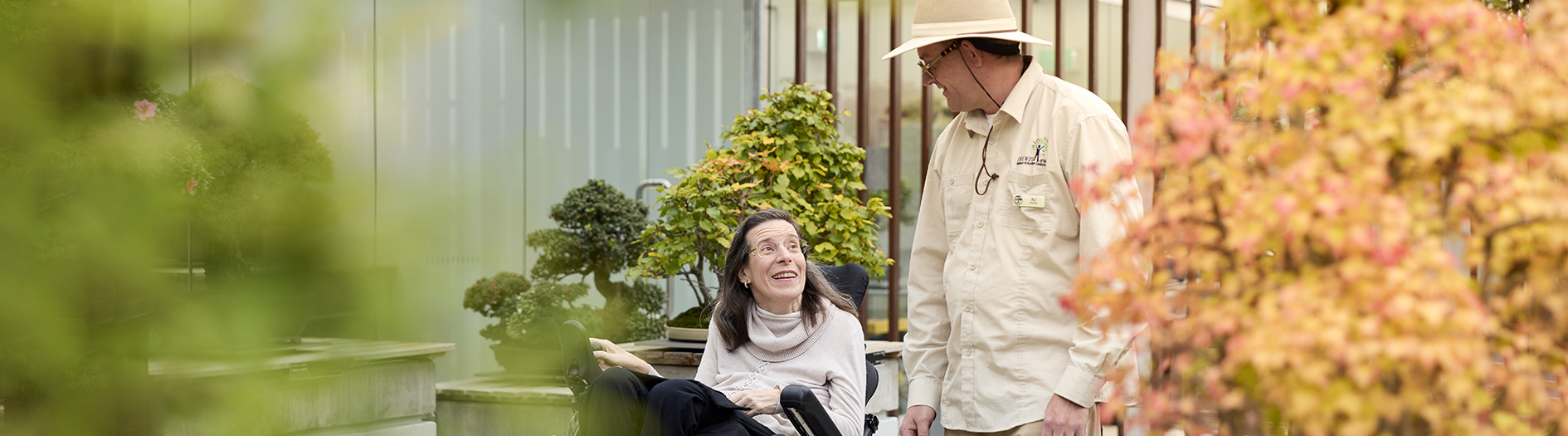
The NBPCA welcomes all members of the bonsai community and embraces people of diverse abilities and experience to apply. The collection is housed in a wheelchair‑accessible venue where assistance animals are permitted.
Expressions of Interest.pdf [opens in new window]
Follow the link for more information or to submit your expression of interest.
Follow the link for more information or to submit your expression of interest.
Bonsai & Penjing Top Stories |
19 October 2022
It's not every day that you get to take the Collection home with you... The National Bonsai & Penjing Collection of Australia book - NOW AVAILABLE!
27 July 2021
Thanks to the latest stamp series from Australia Post, the National Bonsai and Penjing Collection of Australia (NBPCA) can be sent around the world.
We had a very special visit by Costa Georgiadis and his crew from Gardening Australia to film the National Bonsai & Penjing Collection last year. We were amazed with Costa’s energy and enthusiasm and his willingness to greet every person that was watching on from the background.